.svg)
23 February 2024
Elizabeth Pfeuti
Boycott bill passes through UK House of Lords
February 23rd, 2024
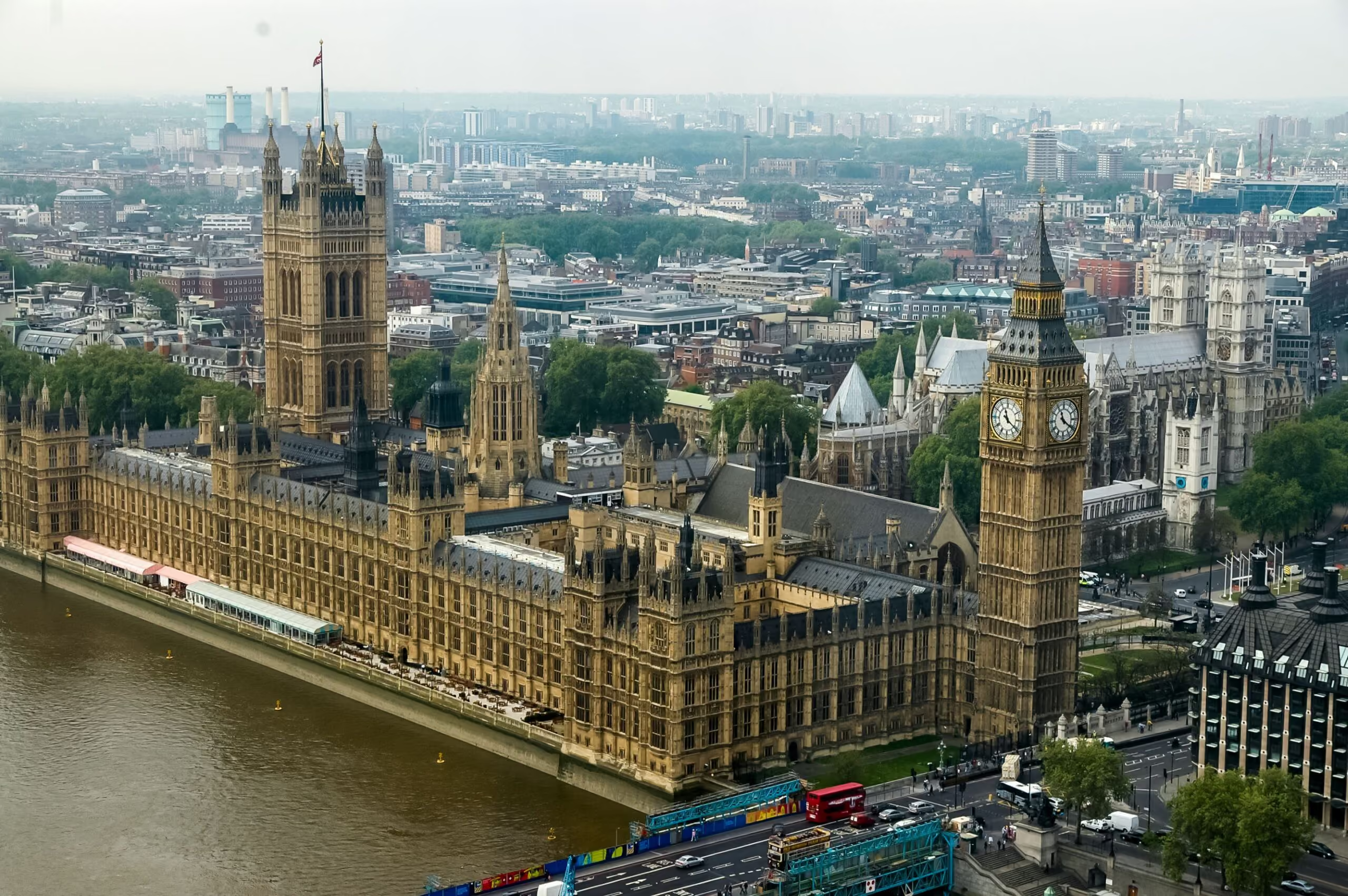
The UK House of Lords has passed a bill prohibiting public authorities from participating in boycotts, divestment and sanctions campaigns.
The Economic Activity of Public Bodies (Overseas Matters) bill would prevent public authorities from boycotting goods or disinvesting from states or territories if to do so could be construed as being based on moral or political disapproval.
The bill includes provisions to allow the government to make regulations to specify certain countries to be exempt from the rules. The government has said it intends to use this power to exempt Russia and Belarus from the ban, meaning public authorities could boycott or disinvest from these countries.
The bill has been criticised for its clause that states Israel, the Occupied Palestinian Territories and the Occupied Golan Heights could not be exempted by regulations, meaning that for these territories to be exempted would require primary legislation.
Baroness Neville-Rolfe, a Conservative peer in the House of Lords, said: “It is vital that public bodies are not allowed to pursue policies, through their investment and procurement decisions, in order to try to legitimise a UK foreign policy that differs from that of His Majesty’s Government.”
Baroness Chapman of Darlington, a Labour peer in the House of Lords, said: “The naivety of the bill is to believe that trustees of pension schemes have, until now, been making investment decisions—which have a profound impact on their funds"—in response to local boycott, divestment and sanctions campaigns.
“There is just no evidence for this. The risk is that the bill will serve only to heighten tensions.”
The bill passed through the House of Lords at its second reading this week and will be committed to the Committee of the Whole House, where amendments can be introduced. It will then go through the report stage and second reading before both the House of Commons and House of Lords will vote to accept any amendments.

.jpg)








Alex Whitebrook
.avif)