11 November 2026
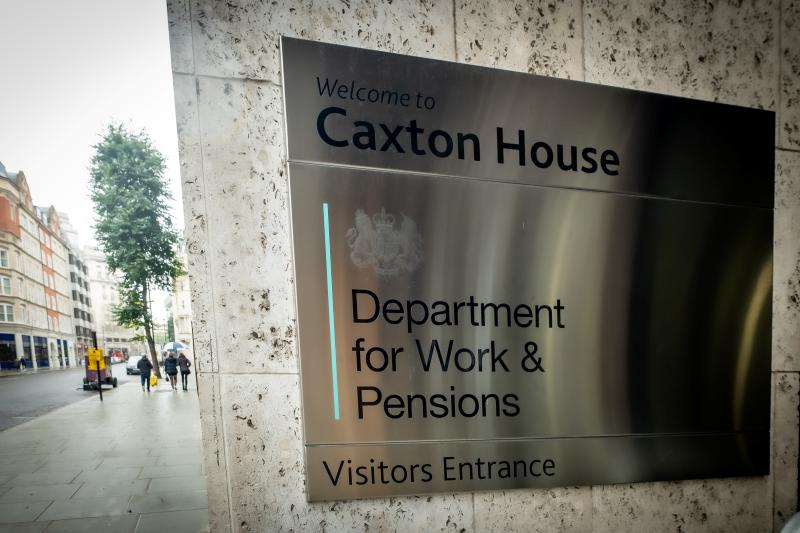
The UK Government’s Department for Work and Pensions (DWP) has opened a consultation on draft guidance which suggests that UK policymakers are seeing stewardship and system-level risks as increasingly integral to fiduciary duty. Without altering trustees' legal obligations, the proposals explain how long-term sustainability-related risks and stewardship may be considered within existing duties through their relevance to financial outcomes.
The consultation closes on 27 January 2027, allowing investors, trustees and advisers to comment on proposals that could influence how fiduciary obligations are interpreted across UK pensions.
One of the most significant aspects of the draft is its treatment of financial materiality.
The guidance highlights developing risks including climate change, biodiversity loss, geopolitical instability, inequality and technological disruption as factors that may affect long-term investment performance. It suggests that some risks can only be fully understood across markets, economies and financial systems, reflecting pension funds' exposure not only to individual companies but also to the resilience of the wider environments in which they operate.
The draft also cites the Financial Markets Law Committee's 2024 review of fiduciary duties, which concluded that sustainability-related factors should be considered by trustees where they are financially material. The reference reinforces the view that long-term sustainability and system-level risks can fall within existing fiduciary obligations.
James Alexander, chief executive of UK Sustainable Investment and Finance Association (UKSIF), said systemic risks such as climate change and biodiversity loss can have significant implications for long-term investment outcomes. Alexander said he hopes the consultation will clarify how trustees should apply existing fiduciary and related investment duties in practice.
The draft also addresses members' future costs and circumstances of living, noting that retirement outcomes depend not only on pension pot size but also on what it can buy. While trustees are not expected to assess these factors routinely, the guidance suggests they may be relevant where there is a credible connection to long-term retirement outcomes.
The UK’s proposed approach also differs subtly from Europe's double materiality framework. Rather than treating environmental and social considerations as a separate lens alongside financial materiality, the draft guidance suggests many of these issues should be considered as potential drivers of long-term financial outcomes in their own right.
For stewardship professionals, the guidance's treatment of voting and engagement may be just as important as its discussion of financial materiality.
Voting, engagement and other forms of investor influence are presented as part of investment decision-making. Rather than separate policy or reputational activities, the draft guidance frames stewardship as a way for trustees to manage financially material risks and opportunities on behalf of beneficiaries.
The implications may extend beyond pension trustees. Asset managers advising schemes could face greater expectations to demonstrate how voting and engagement activities contribute to risk management and long-term value creation. Companies, meanwhile, may encounter more scrutiny from investors on issues linked to long-term economic and market resilience.
The draft also acknowledges that some risks cannot be addressed effectively by individual investors acting alone. Where issues have a system-wide dimension, trustees may consider collaborative engagement and collective action where doing so supports beneficiaries' interests. That is notable at a time when investor collaboration faces growing scrutiny in some jurisdictions, suggesting UK policymakers view collective stewardship as a legitimate response to financially material risks.
The guidance makes clear that a risk does not need to be direct, easily quantified or supported by complete data before trustees can consider it. Financially material considerations may be indirect, qualitative or difficult to measure, provided they are reasonably capable of affecting long-term outcomes.
This has clear relevance for issues such as climate transition risk, biodiversity decline, artificial intelligence and geopolitical disruption. In each case, the scale and timing of future impacts may be uncertain, but the potential consequences for investment performance and economic resilience could still be significant.
The draft repeatedly emphasises proportionality rather than exhaustive analysis of every conceivable threat. Trustees are encouraged to apply informed judgement and robust governance rather than dismissing risks simply because evidence is incomplete or outcomes are difficult to forecast.
Although the draft may change before publication, its direction appears clear. The proposals do not expand fiduciary duties, but they do provide one of the strongest official signals yet that stewardship, system-level risks and long-term sustainability considerations can form part of how those duties are exercised in practice.






Guest article by Frédéric Ducoulombier - EDHEC Climate Institute