.svg)
4 June 2021
Elizabeth Pfeuti
June 4, 2021
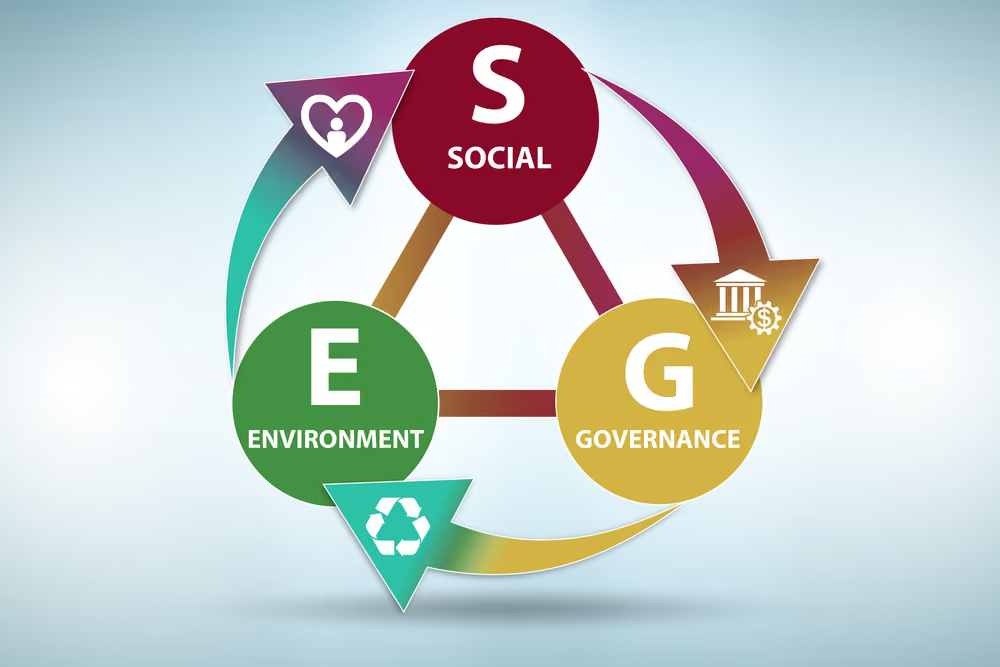
There is no doubt that the proliferation of ESG investing has coincided with the raised profile of social and environmental sustainability, exacerbated or highlighted by the COVID-19 pandemic.
The sustainability challenges facing the world, and underlined by the United Nation's (UN's) Sustainable Development Goals (SDGs), have worsened since the onset of the pandemic. Whilst ESG investing has proliferated, progress towards the SDGs has faltered.
Some say that ESG investing has catalysed a shift among companies away from true sustainability, with the dramatic inflows to ESG funds failing to support real-world sustainable developments in line with the UN’s Sustainable Development Goals (SDGs).
Underpinning this claim is the notion that ESG reporting is a distraction to the real metrics that businesses should be focused on to achieve the SDGs.
At Minerva, however, we have seen the power of ESG investing to bring about robust, transparent disclosure processes that set us on the right path for long-term sustainability and achievement of the SDGs.
Establishing a strong culture of non-financial reporting has been one of the greatest achievements of ESG investing so far - and many of developments have been achieved with little input from governments or international legislation. Events such as COP26 in November 2021 will help to further bond the ideas of reporting and sustainability more correlatively.
ESG investing, and the associated ideas of reporting and disseminating data, are not on a linear path, and in many regards are still in their infancy.
It would be unfair to say that it is a perfect system, but ESG investing should not be dismissed as a separate entity to achieving the SDGs. Transparency and accountability should be seen as hallmarks of our modern approach to sustainability, which can help investors optimise information to create meaningful change.

.jpg)