
.svg)
27 October 2023
Elizabeth Pfeuti
A4S releases guide for managing nature risks
October 25th, 2023
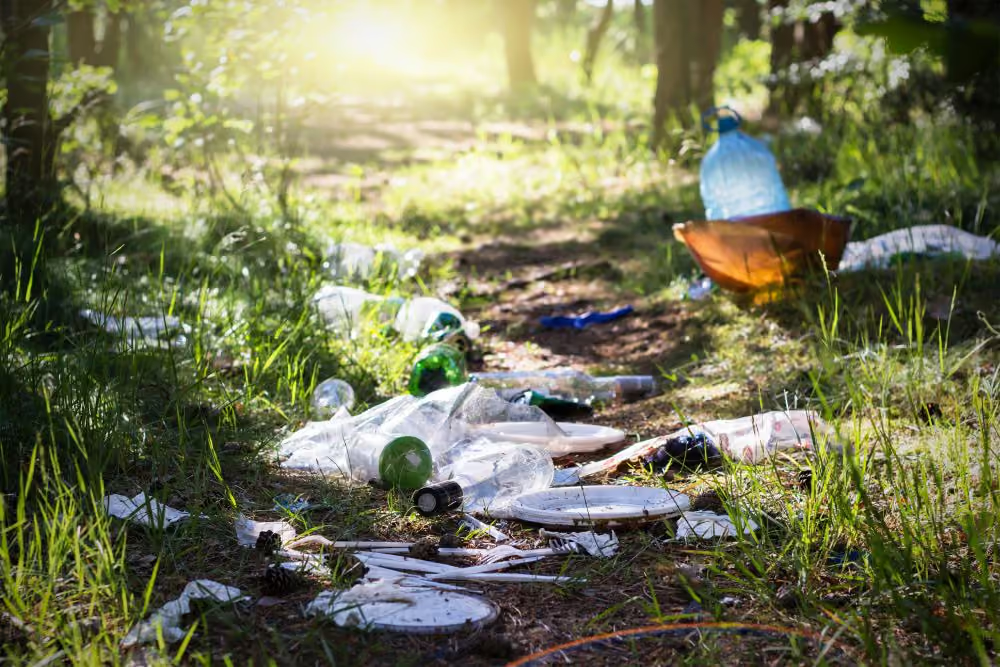
Accounting for Sustainability (A4S) has published its recommendations for pension fund chairs and trustees to handle nature-related risks and opportunities.
The organisation has released a guide with five top tips and step-by-step actions for pension schemes to manage the risks of the nature crisis and identify investment opportunities.
According to the guide, schemes should deepen their understanding of nature-related risks and opportunities, get started by identifying one key risk and opportunity, manage portfolio risks, engage at both a micro- and macro-stewardship level and invest in the opportunities.
The guide highlights the possible investment risks and opportunities, such as water pollution, which may have a negative impact but also provide opportunities for companies that help purify water.
To deepen understanding of risks, A4S recommends pension funds identify training needs from the board level down focusing on nature-related risks, financial implications and potential actions and responses.
When identifying one key risk and opportunity, the guide establishes five areas that tend to align with existing investment efforts for asset owners including deforestation, water (and waste), agriculture, plastic and packaging and marine.
However, it also acknowledged that the initial risks to focus on will differ from one asset owner to the next.
In managing portfolio risks, schemes should ask their asset managers to rate holding companies’ approaches to nature-related risks and compare with an independent assessment where possible.
The guide also highlighted the importance of stewardship as a key lever to addressing systemic risk, while engaging on a micro-level with companies to address nature-related risks will improve risk and return profiles.
Additionally, schemes that engage on a macro-level with policymakers, regulators and standard setters to protect nature will support the global economy and long-term market returns more broadly.

.jpg)










.avif)