.svg)
26 November 2021
Alex Whitebrook
November 11, 2021
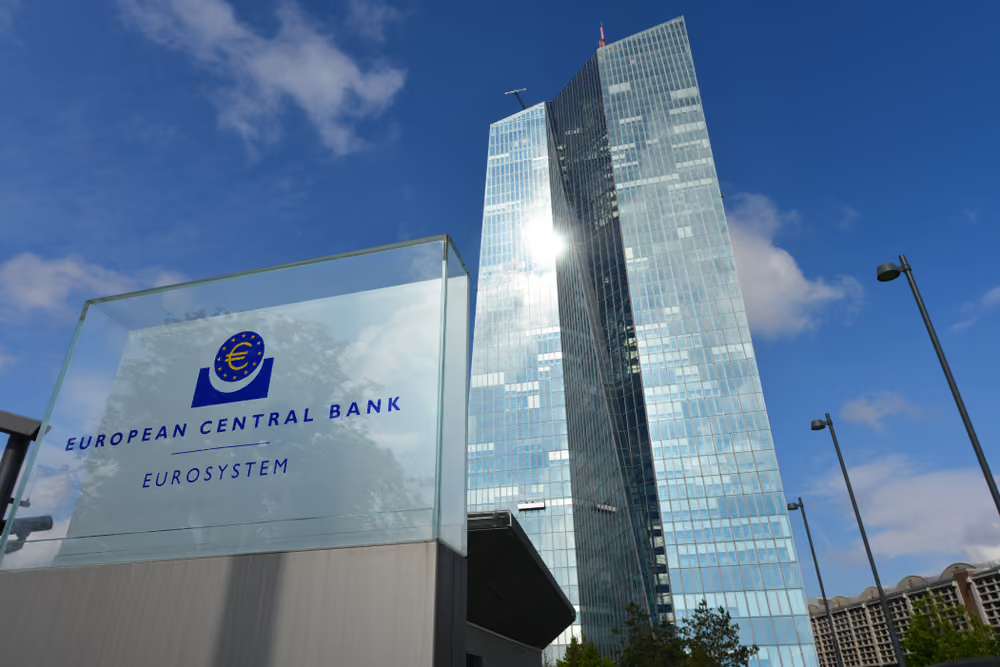
On Monday, in a first-of-its-kind exercise, the European Central Bank (ECB) released a report in which it evaluated the progress of climate-related and environmental risk management amongst the banks it supervises.
The ECB requested that 112 significant banking institutions within the EU conduct a self-assessment of their current practices against the ECB supervisory expectations. The assessment involved evaluating current practices and submitting implementation plans detailing how and when they would bring their practices into line with the Guide.
These 13 expectations provide guidance on how the ECB expects banks to consider climate and environmental risks when formulating and implementing their business strategy. It further explains how the ECB expects institutions to become more transparent by enhancing their climate-related and environmental disclosures.
The recent report found that no institutions are close to fully aligning their practices with supervisory expectations. Institutions remain at the early stages of developing their practices to reflect climate-related and environmental risks, with 90% of their reported practices to be only partially or not at all aligned with the ECB’s expectations.
These are concerning reports by the ECB considering that 2021 is expected to be the EU’s most expensive year for extreme weather events since 2002. The floods that hit Germany, Belgium and the Netherlands during the summer are a striking example of this, with the cost of damages for insurers expected to reach €10 billion.
Following on from this latest report, the ECB is planning an EU-wide stress test in the first half of 2022 in which the carbon intensity of outstanding loans will be evaluated alongside their supervised banks’ ability to withstand the financial fallout from environmental or climate shocks. Banks that are performing poorly in the test may face higher capital requirements.
In a blog post accompanying the report, ECB Executive Frank Elderson wrote "The message of today's report is clear: the time for action is now… Banks urgently need to set ambitious and concrete goals and timelines – including measurable intermediate milestones – to mitigate their exposure to current and future Climate and Environmental risks.”

.jpg)