.svg)
12 January 2024
Elizabeth Pfeuti
EU says circular economy is “vital” to meeting climate goals
January 12th, 2024
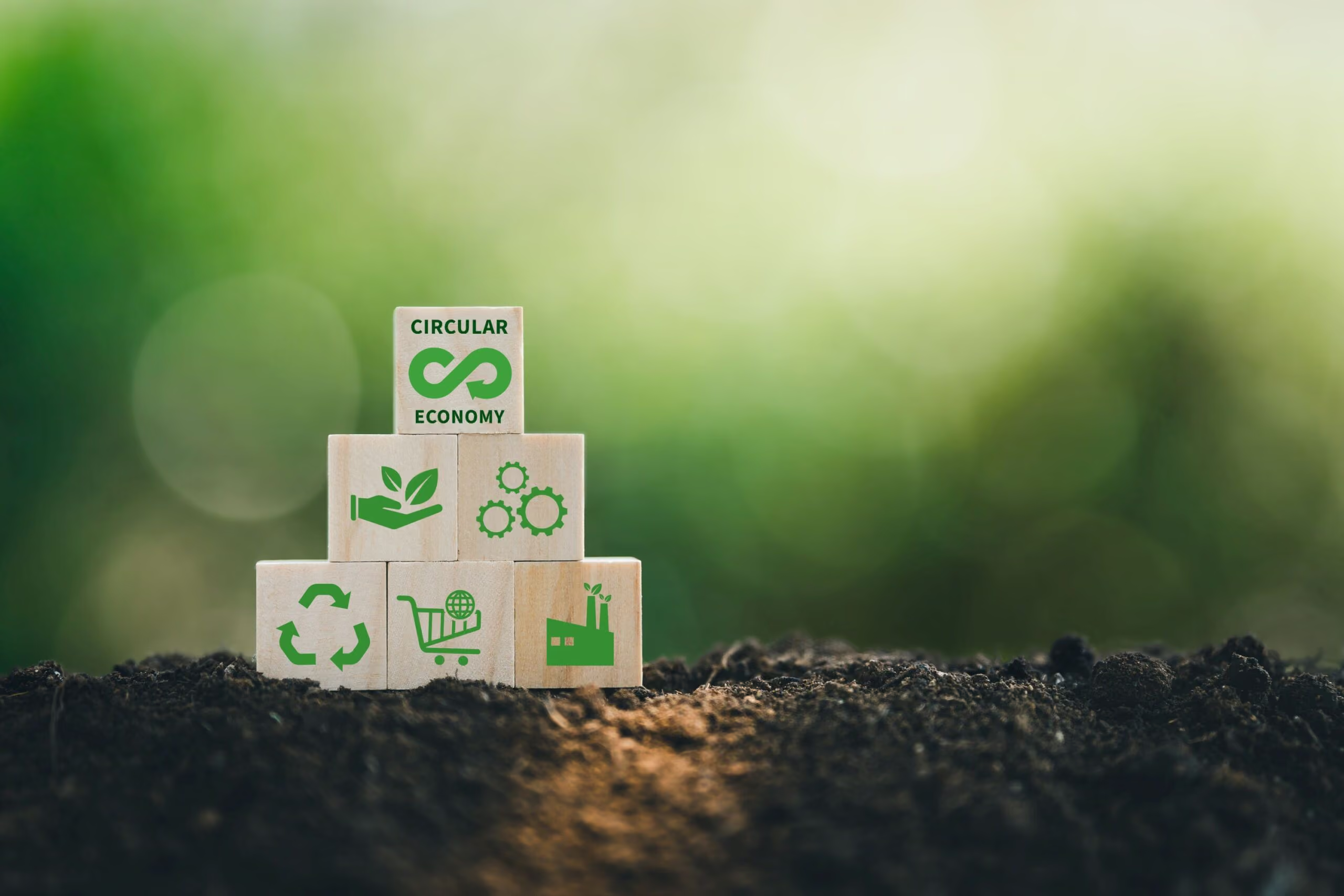
The European Commission has renewed its commitment to a circular economy and reducing reliance on fresh resources, describing it as a “no brainer”.
Florika Fink-Hooijer, director general for the environment at the European Commission, affirmed its dedication to establishing a circular economy, which she described as “vital”.
Speaking at a recent EU event, Fink-Hooijer spoke about the importance of improving specific product groups to enhance their circularity, energy performance and other environmental sustainability aspects, Net Zero Investor reports.
Fink-Hooijer said: “The current model of extracting virgin resources to produce something new, which is then thrown away, is not sustainable.
“We need to reduce our need for fresh resources and increase the re-use and recycling of products and materials. It’s a no-brainer.”
The EU launched its Circular Economy Plan in 2020 as one of the foundational aspects of the European Green Deal.
The plan targets how products are designed, promotes circular economy processes, encourages sustainable consumption, and aims to ensure that waste is prevented and resources used are kept in the EU economy for as long as possible.
It aims to make sustainable products the norm in the EU, empower consumers and public buyers and ensure less waste.
The plan targets the sectors that use most resources and where the potential for circularity is high, such as electronics and ICT, batteries and vehicles, packaging, plastics, textiles, construction and buildings, food, water and nutrients.
Fink-Hoojier added: “There’s always a cost to a transition, and we need to direct more finance and investment to the circular economy.
“Circularity will be the model for our economy and it is also vital for the long-term competitiveness of the EU.”

.jpg)