.svg)
23 July 2022
Elizabeth Pfeuti
July 22, 2022
The Code of Conduct for ESG Evaluations and Data Providers highlights the current status of evaluations and data provision issues.
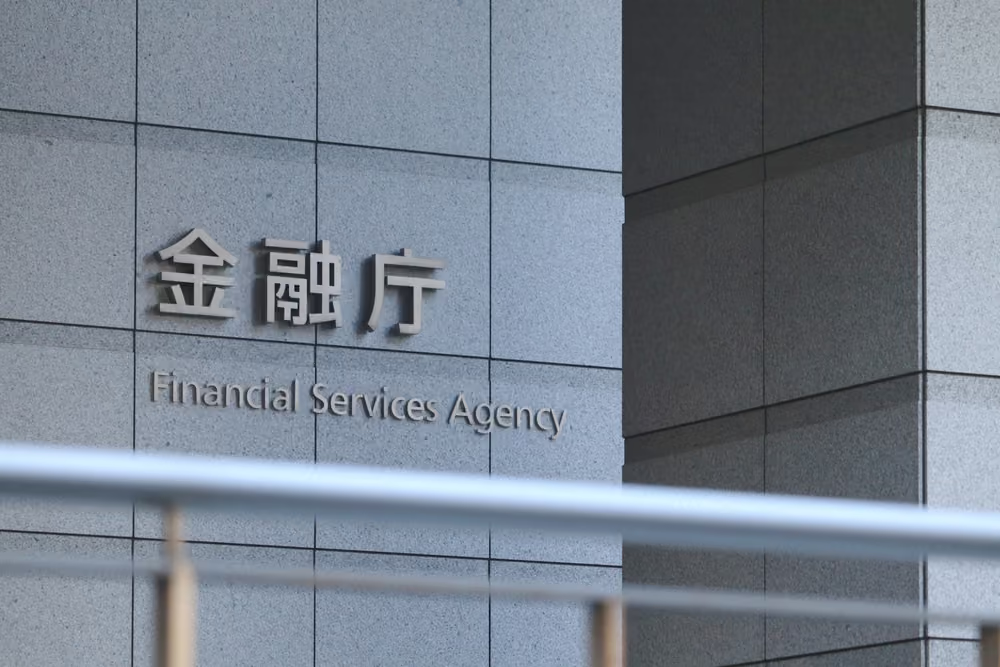
Japan’s Financial Services Agency (FSA) has requested public comments on its newly released draft Code of Conduct for ESG Evaluations and Data Providers.
The code of conduct identifies the current status of ESG evaluations and data provision issues in view of future market development.
Additionally, it examines the actions expected to be taken by data providers and outlines principles, such as the principle of 'securing quality'.
The guidelines recommend evaluation and data providers should establish “necessary procedures to analyse in detail information that can be reasonably obtained and formulate and provide ESG evaluation and data”.
Read Minerva's previous coverage of the story:
https://www.old.manifest.co.uk/japans-regulator-urged-to-toughen-esg-rules/
Meanwhile, measures to establish “logical and cross-organisational and continuously applied methodologies” should be taken to provide high-quality ESG evaluation and data according to the guidelines.
The code of conduct states that providers should check on a regular basis whether there would be any apparent discrepancy between the evaluation results and service provision methodologies, and methodologies should be updated as necessary.
The FSA also suggests that data providers should secure necessary professional human resources to ensure the quality of the evaluation and data provision services they provide.
According to the regulator, as ESG initiatives are rapidly expanding, the market as a whole is facing a shortage of human resources who have expertise in collecting, analysing, and evaluating data.
“Even if individual employees do not necessarily have all the necessary expertise, it is important for the entire organisation to secure and provide the necessary knowledge,” the FSA said.
The proposed code of conduct follows on from the report ‘Building A Financial System that Supports a Sustainable Society’.
This was published by the regulator in June 2021 to raise issues around ESG evaluation and data providers, including transparency and fairness of evaluation.
Since February 2022, the FSA’s Technical Committee for ESG Evaluation and Data Providers, discussed a wide range of issues on this, including the current status of ESG evaluation and data.
Based on these discussions, the FSA compiled the code of conduct and is soliciting a wide range of opinions.
The comment period is open until 5 September.

.jpg)