.svg)
7 December 2023
Elizabeth Pfeuti
Report finds major banks are financing deforestation and biodiversity loss
December 7th, 2023
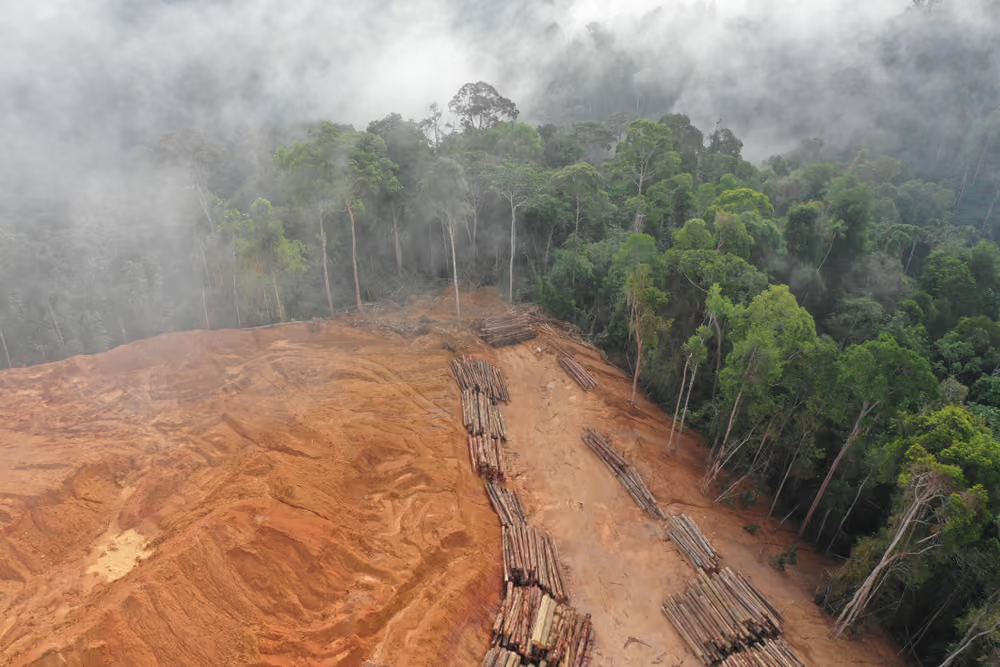
Banks have poured $307bn into high-risk forestry and agriculture companies linked to tropical deforestation since the Paris Agreement was signed, a report by the Forests & Finance Coalition has found.
The report, ‘Banking on Biodiversity Collapse: Tracking the banks and investors driving tropical deforestation’, considered the role played by big finance in driving deforestation and biodiversity loss.
The report mapped commercial financial flows to the operations of 300 companies within six forest-risk commodity sectors – beef, palm oil, pulp and paper, rubber, soy, and timber – which collectively cause most tropical deforestation globally.
It also identifies the largest 30 forest-risk bankers, which includes major banks from tropical forest countries including Brazil and Indonesia, as well as those from significant import and financial jurisdictions such as the US, EU, Japan and China.
The report also assessed major banks’ ESG policies, scoring them on a set of 38 criteria. It found Wall Street giants JPMorgan Chase, Bank of America and Citigroup are failing to safeguard forests, biodiversity or human rights in their policies.
Bank of America’s ESG policies scored just 22%, Citigroup at 37% and JPMorgan Chase trailing behind with just 15%. These banks also play a major role in investing in pulp and paper, and palm oil.
Merel van der Mark, Forests & Finance coordinator, said: “This data shows the blatant hypocrisy of financial institutions who are members of sustainability initiatives like the Principles for Responsible Investments or Principles for Responsible Banking, or that have net zero commitments but are continuing to finance companies that make these goals impossible to meet.
“It is clear that leaving financial institutions to set their own ESG standards will not be enough to shift financial flows towards sustainable practices.”
She added: “Ultimately, governments must establish the policies and penalties necessary to safeguard society and the ecosystems on which we all depend.”

.jpg)