.svg)
9 December 2019
Editor
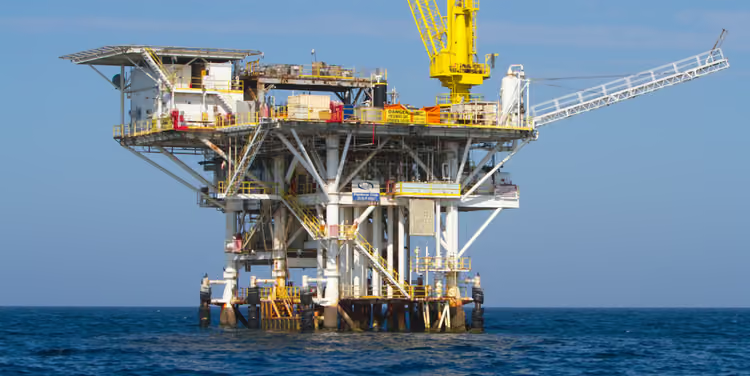
Norwegian oil and gas giant Equinor is facing a significant showdown with investor activists as its bid to drill for oil in a well-known Australian beauty spot intensifies.
Under its proposals, Equinor wants to drill a 2.2km
exploration well in the Great Australian Bight, a stretch of coastline regarded
as one of the world’s most unspoiled marine environments.
However, the plans are being fiercely contested by
an alliance
of environmental groups which includes Greenpeace Norway and the World Wildlife
Fund, who purposefully bought shares in Equinor to oppose the proposals at the
company’s AGM in May.
The shareholder motion
implored Equinor to desist its oil and gas exploration and production in
"frontier and pristine" environments, including the Bight.
While the shareholder
resolution was unsuccessful, the activists are resolute in their determination
to stop the proposed drilling – which they warned would endanger both the
climate and local wildlife.
As it stands, Equinor’s
proposals are still very much on the table, although Australia's federal regulator
had recently summoned the company to modify and resubmit its proposals
following concerns about its oil spill emergency response plan.
In its issue notice to Equinor last month, the National Offshore Petroleum Safety and Environmental Management Authority (NOPSEMA), which has previously rejected a similar exploration application from BP, said: “Equinor must provide NOPSEMA with further information about matters relating to consultation, source control, oil spill risk, and matters protected under Part 3 of the Environment Protection and Biodiversity Conservation Act 1999.
“The
opportunity to modify and resubmit does not represent a refusal or rejection of
the environment plan. This is a normal part of NOPSEMA’s environment plan
assessment process.”
In
response, Equinor resubmitted its environmental plans for its Bight drilling
activity on 29 November 2019, with NOPSEMA’s next decision scheduled to
occur by 30 December.
Despite
fears that an oil spill from the drilling would be catastrophic to the
Australian coastline and marine life, Equinor maintains the risks are small.
“Many
people voice concerns about the risk of an oil spill, but we have long
experience from our home waters and around the world with exploration in rough
seas and deep waters, having drilled nearly 3,000 wells in 50 years.
“Our
Environment Plan shows that the risk of a spill is extremely small, and we are
taking every possible precaution to minimise risk,” the company stated on its
website.
Netherless, environmental groups and
shareholders are staying strong in their fight to prevent the drilling
activity.
Speaking to BBC News last month, Australian Heath
Joske, one of the activists who spoke at Equinor’s AGM in May, said if
the drilling goes ahead, community opposition will strengthen.
"Nothing's changed here. We're just
waiting on the decision right now and if they [NOPSEMA] tick it off things will
escalate, opposition-wise, for sure,” Joske told BBC News.
Meanwhile, a petition on change.org against the
Bight plans has nearly reached its target of 75,000 signatures.
“If NOPSEMA wrongly decide to approve the plan to drill, I will be
sending this petition to MP Melissa Price (minister for environment) and MP
Angus Taylor (minister for energy) to escalate the issue and illustrate the
massive public disapproval,” the petition’s originator stated.
Equinor’s controversial oil drilling proposals come as Greenpeace Nordic prepares to take the Norwegian government to Oslo’s Court of Appeal for opening up new oil drilling in the Arctic.
According to
the environmental group, Norway is the seventh biggest exporter of
climate-wrecking emissions on the planet, with the country drilling more oil
wells than ever before.
“Right now, climate change is contributing to intensifying wildfires, droughts, hurricanes and heatwaves and causing deaths around the world,” Frode Pleym, head of Greenpeace Norway, said in a statement. “The Norwegian government can no longer ignore the dangerous impact its exported oil is having on the climate.
“Climate
change knows no borders. Oil is oil, no matter where it is burned, and the
government needs to cancel all drilling for new oil in the Arctic,” said Pleym.