.svg)
14 August 2024
Elizabeth Pfeuti
Major companies falling short on nature assessments
August 14th, 2024
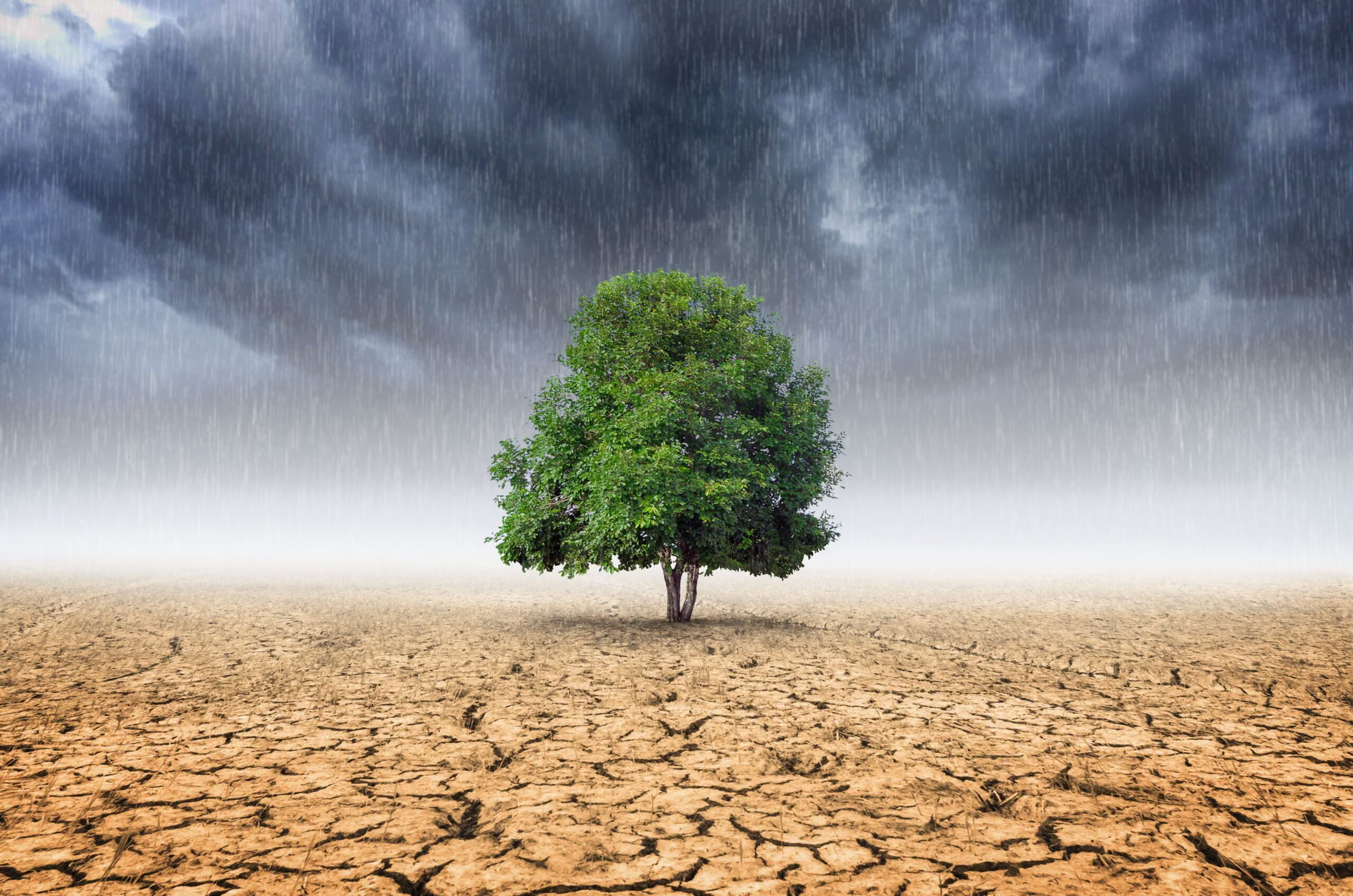
The majority of companies are failing to evaluate and measure their impact and dependence on nature.
The World Benchmarking Alliance (WBA) Nature Benchmark, which assesses more than 800 companies, found just 5% of companies have carried out an assessment of the impact of their operations on nature, while less than 1% have assessed their dependencies on nature.
The report also warned there was a risk of greenwashing on plastic, with only 19% of companies providing quantitative metrics to demonstrate their plastic reduction.
The figure drops to 7% when assessing whether those companies have quantitative, time-bound targets to reduce plastic use and waste.
While the overall performance across all industries is low, the report identified two industries that outperformed the rest: personal and household products and pharmaceuticals and biotechnology.
Compared to other sectors, companies in these two industries were more likely to publish sustainability or integrated reports.
The report noted that both industries are consumer-facing, which tends to lead to better sustainability practices to attract environmentally-conscious customers.
The report also assessed water stewardship ahead of an expected water crisis, with global freshwater demand expected to exceed supply by 40% by 2030.
It found that while 29% of companies report water use reductions or disclose water usage from water-stressed areas, which suggests a growing awareness of their role in ensuring water availability worldwide, only 15% are reporting on discharged pollutants, and just 4% have set targets to reduce them.
Jenni Black, nature transformation lead at the WBA, said: “Our research shows that the vast majority of large companies continue to take nature for granted, despite the fact a healthy planet underpins a healthy economy… Two years after the GBF was agreed, it’s imperative for companies to understand and act on their impacts on nature.”




Guest article by Frédéric Ducoulombier - EDHEC Climate Institute