
.svg)
10 April 2025
Elizabeth Pfeuti
April 10, 2025
The way policies and practices for the preparation and conduct of general shareholder meetings are evolving could change essential elements of sound corporate governance, according to the Organisation for Economic Co-operation and Development (OECD)'s latest Shareholder Meetings and Corporate Governance report.
The review examined how several factors may be impacting shareholder rights, engagement and equitable treatment regardless of the format of a meeting, as set out in the G20/OECD Principles of Corporate Governance.
It covers 50 major economies, and includes case studies from the Netherlands, Singapore, South Africa, Türkiye and the United Kingdom.
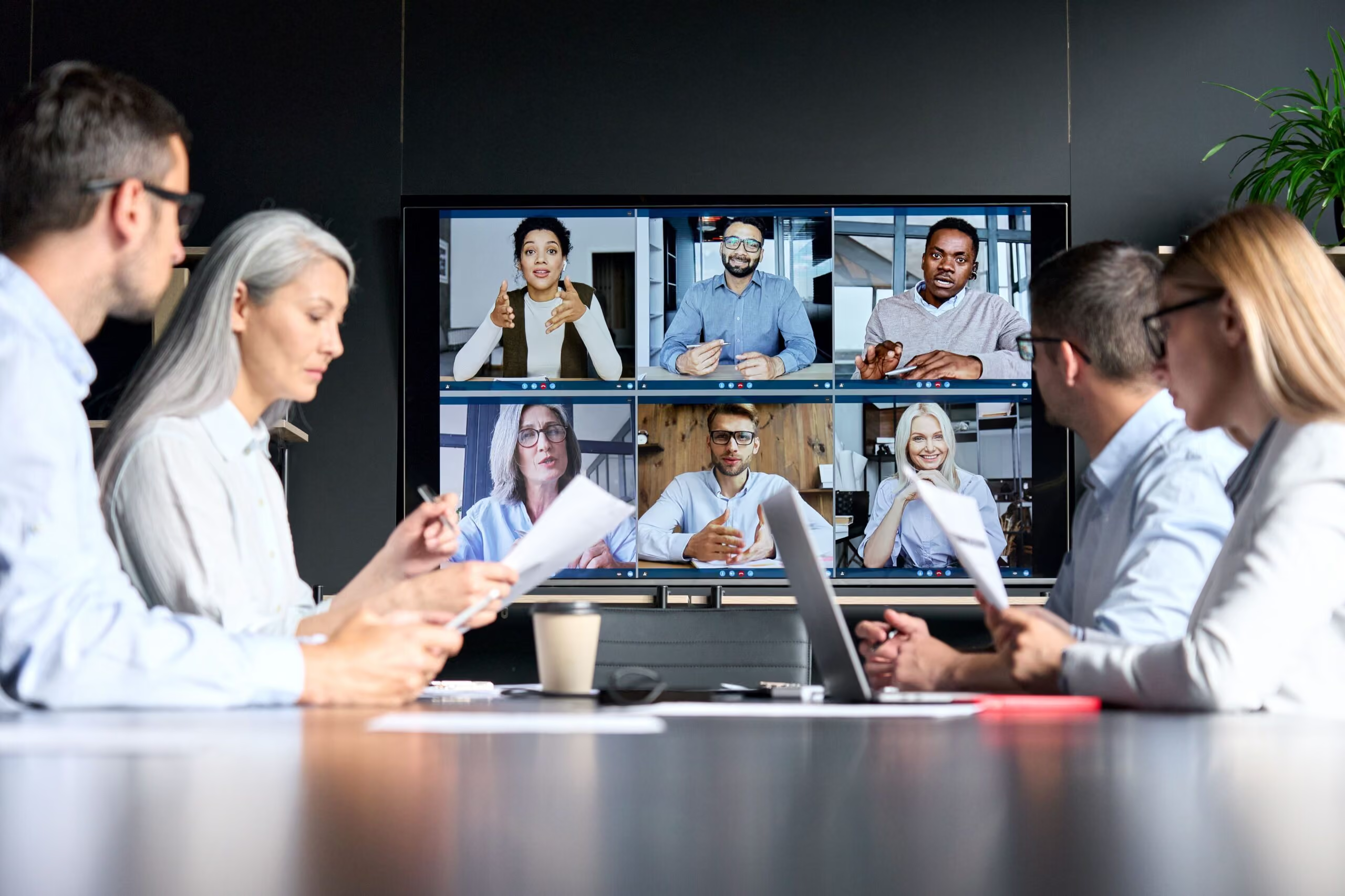
One of the key points highlighted was that while virtual and hybrid shareholder meetings have become increasingly common, many companies still prefer meetings to be in-person. Temporary emergency frameworks set up during the pandemic are gradually coming to an end, and shareholders are being asked whether to extend reforms to allow companies scope for more remote participation, and if so, what would constitute a mandate for virtual meetings.
Meanwhile, some companies are choosing to move to virtual-only meetings due to activism over broader policy issues,and security concerns such as identify verification. More regulators are now issuing guidance for a coherent framework for shareholder meeting conduct, particularly regarding issues remote participation and voting, Q&A processes and information disclosure.
Another issue raised in the report is a lack of governance clarity over how shareholders can submit new resolutions during meetings. There has been a surge in shareholder resolutions, and the right for companies right to accept or reject these proposals for discussion is not always clear and may sometimes lead to costly legal action.
Elsewhere, the report made recommendations to support market initiatives aimed at ensuring shareholder meetings become more inclusive for retail and foreign investors, monitoring potential obstacles to voting.
Lastly, a significant number of investors are requesting greater transparency in how meeting minutes are recorded, with clear guidance required on a specified minimum content of meeting minutes as well as clarity over disclosure of webcasts, transcripts and audio/visual recordings.
You can read more of our articles by clicking here.








.jpg)
