.svg)
15 July 2025
Jack Grogan-Fenn
July 15, 2025
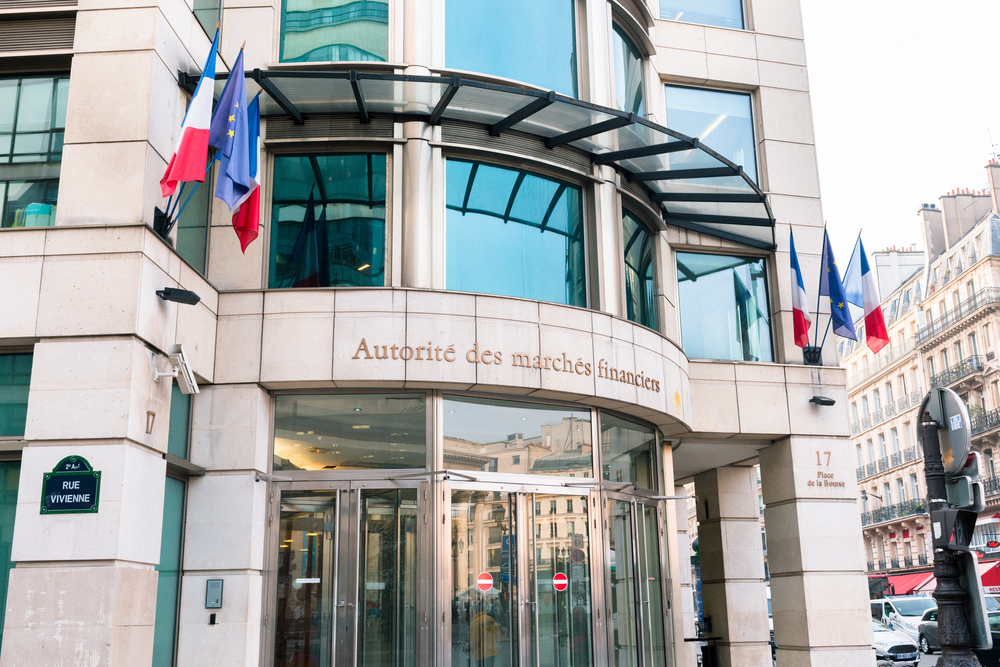
The Autorité des Marchés Financiers (AMF), France’s financial regulator, has highlighted several cases of poor performance by large asset managers operating in the country.
A recent report from the AMF inspected five unnamed asset management companies – with AUMs ranging from less than €1 billion (U$1.2 billion) to more than €50 billion – between 2022 and 2024.
The regulator examined the organisation and governance of voting and shareholder engagement at the asset managers, the way in which voting and engagement policies were drawn up and updated, their implementation and monitoring and the information that was made available to investors.
AMF stressed that the report was intended to point out good and poor practices by asset managers, and “does not represent an opinion or recommendation”. The report identified poor practices in three key areas.
The asset managers were found to be most poorly performing on internal control frameworks, with three of the five managers possessing no procedures dedicated to the organisation of internal control.
AMF pointed to both a failure to implement procedure dedicated to the organisation of internal control and at least annually conduct a review of the “robustness” of their voting and engagement system.
The regulator flagged multiple examples of poor practice regarding information being shared at fund level. One case of poor practice was failing to include an analysis of the impact of their votes in their engagement report and the outcomes of their engagement process on the strategy or governance of the companies in their portfolios.
The other case of poor practice in this area was the asset managers’ annual report of funds failing to include “easily available” statistical data on resolutions adopted at the AGMs of issuers held in the portfolio and engagements agreed with these issuers.
AMF also highlighted an example of poor practice in the asset managers’ selection and monitoring of proxy voting service providers. This case was not considering the proxy voting provider to be an “essential or significant” service provider when ESG or socially responsible investing collective investment management represented a significant portion of AUM.
The regulator additionally noted that while asset managements are “generally adopting suitable practices” it stated that there is “still room for improvement”. AMF said this was particularly the case for the purpose of the resolutions voted on at AGMs, which fail to “adequately address environmental and social issues”.
However, the AMF identified areas where the asset managers had showcased good practice.
Asset management companies have conducted collaborative engagements with other shareholders or made individual engagements with the investee companies. “In this area, the AMF has identified a good practice consisting of establishing a transparent escalation process tailored to the management strategy, with clear trigger rules,” the regulator stated. “This system enables the fund to adjust its approach if the company in which it has invested in is reluctant to change its practices, or if the expected progress is deemed insufficient.”
There were no examples of poor practice found among the asset managers’ set of procedures dedicated to the exercise of voting rights and shareholder engagement, comprising an annually updated voting policy and a separate engagement policy or plan.
There were also cases of good practice among the five asset managers in their selection and monitoring of proxy voting service providers. This included maintaining a record of any votes cast contrary to the proxy voting providers’ recommendations but were compliant with the asset manager’s voting policy, as well as justifying “material and recurring” differences.
In May, Minerva Analytics reported that asset manager progress on responsible investment practices had slowed since the start of since 2022 according to research by NGO ShareAction.
However, the five French asset managers scored among the 76 total largely performed well. AXA Investment Managers placed third, BNP Paribas Asset Management ranked fourth, Amundi Asset Management was 12th while Ofi Invest Asset Management came 16th. The lowest French asset manager was Ostrum Asset Management, ranking 32nd.
You can read more of our articles by clicking here.







.jpg)