Sustainable Stewardship Snippet 2: Regulating for Climate Change

10 January 2020

Editor

Latest News

Australia narrows climate reporting scope mid‑rollout

Minerva Proxy Update

Follow This challenges Shell days before key vote

SRD III is Europe’s chance to fix proxy plumbing

SEC Steps Closer to Unwinding Climate Disclosure Rules

Minerva Proxy Update

Featured Briefings

Australia Proxy Season Review 2025

2026 Proxy Season Preview

Diversity Divergence: Shareholders Steadfast Amid Pervasive Political Posturing

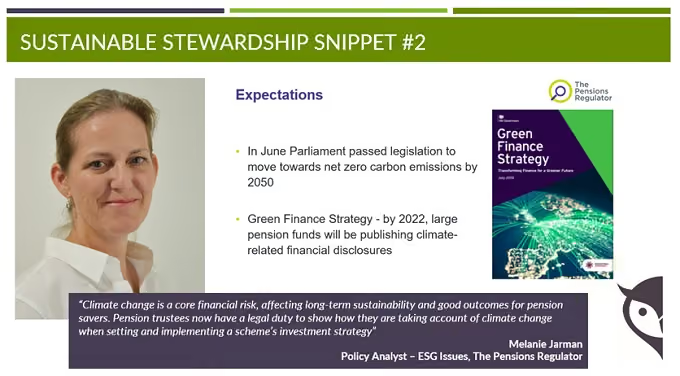
Climate change is a significant risk and all Pension Scheme Trustees now need to give it specific attention, according to The Pensions Regulator.

At Minerva’s Autumn ESG Education Event in London, Melanie Jarman, Policy Analyst – ESG Issues at TPR, updated attendees on recent legislative changes in the UK that affect pension schemes. These changes explicitly recognize the significant financial risk posed to long term investors by climate change, and place upon Pension Trustees the responsibility to formally consider that risk, and how it might affect their scheme, as part of their fiduciary duties.

With the introduction of these new Occupational Pension Scheme Investment Regulations from the Government, it falls to TPR to ensure that UK Defined Benefit and Defined Contribution Pensions Schemes comply. Melanie suggested that, in finding it necessary to create the legislation, the Government had likely considered the far-reaching impact of climate change in terms of breadth and magnitude; the foreseeable nature of the risk; the potential irreversible consequences of climate change if nothing is done; and that the extent or severity of any change is dependent on short-term actions.

Melanie summarised what asset stewards needed to do for the
October 2019 deadline introduced by the new legislation:

  • Have written policies in relation to financially material considerations (including on ESG considerations, such as climate change);
  • Consider the extent (if at all) to which members’ views on non-financial matters are taken into account in investments; and
  • Clearly explain their stewardship approach towards their investments, including engagement with investee firms and the exercise of voting rights.

With news that more than half (57%) of the Society of Pension Professionals’ (SPP) membership has not made any changes to portfolios in terms of environmental, social and governance (ESG) issues, Melanie’s suggested key questions for Trustees in considering their actions under the new legislation are very relevant:

  1. Have Trustees discussed an approach to climate-related risks and opportunities? Will such a discussion happen at least annually?
  2. For DB schemes, has the Trustee Board considered how the scheme sponsor might be impacted by climate risk?
  3.  Have Trustees discussed with advisers the impact of climate risk on the scheme’s portfolio - both transitional risks and potential physical damage under different climate scenarios?
  4. Do Trustees plan to monitor and oversee advisers’ and managers’ approach to climate change, to ensure consistency with their scheme’s SIP? 

For more information on how Minerva is helping asset steward get to grips with their new ESG responsibilities, say hello@minerva.info


Related Stories

Australia narrows climate reporting scope mid‑rollout

May 20, 2026
Read More

SEC Steps Closer to Unwinding Climate Disclosure Rules

May 13, 2026
Read More

Texas Climate Investing Blacklist Stays on Ice

April 17, 2026
Read More

FCA Sustainability Disclosure Proposals: A Turning Point for UK Market Transparency

April 10, 2026
Read More

BP’s Climate Block Brings Investor Backlash

April 8, 2026
Read More

Minerva Analytics Solutions Recognised at ESG Investing Awards

March 31, 2026

Alex Whitebrook

Read More