.svg)
26 March 2020
Elizabeth Pfeuti
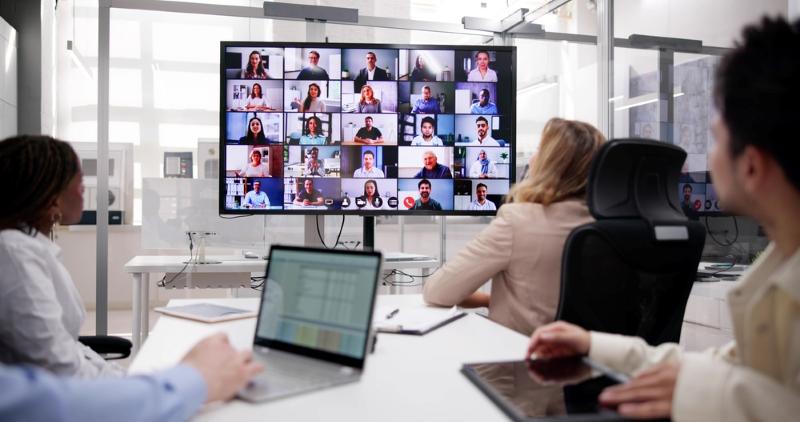
Companies, regulators and markets are increasingly realising that the AGM season will be severely disrupted by the COVID19 pandemic.
As social distancing becomes the norm, traditional annual
meetings where shareholders gather to hear CEO presentations and ask questions
of management are simply no longer feasible.
Minerva has written to quoted companies requesting clarity on
their AGM proposals and highlighting the risk of too many postponing meetings until
June, ahead of the July cut-off for those with financial year-end of 31
December 2019.
Minerva is championing hybrid AGMs as a way for companies to continue reporting to shareholders and giving them the option to vote, and for investors to still hold companies to account.
In the absence of face-to-face meetings, it is vital that companies, boards and their investors can interact.
Around the world there have been moves to allow firms to shift to wholly
virtual AGMs, including in New York where Governor Andrew Cuomo has issued
an executive order allowing corporations to hold annual meetings for
shareholders solely via virtual-only set ups.
On 20 March, the Australian Securities and Investments
Commission (ASIC) also announced a formal ‘no action’ position on virtual AGMs, as long as a company
has the technology to permit all shareholders to fully engage, including being
able to ask questions of the auditor and voting by poll rather than a show of
hands.
In the UK, it has been reported that the London Stock
Exchange Group is lobbying for listed companies to be allowed to hold remote
annual meetings. Companies have the option of holding an entirely
virtual AGM or choosing to host a ‘hybrid’ meeting for shareholders.
However, it
is important that companies deciding to go down this route understand the
difference and convey this clearly to shareholders and participants, so they
know exactly what to expect when they take part.
Currently only a minority of companies may have specific provisions in their articles which allow for a virtual AGM. It is therefore essential that companies provide clear statements assuring shareholders that they will have the same participation rights as in a physical meeting.
It seems likely that remote AGMs will grow in popularity as
companies and shareholders alike realise the benefits over the traditional ‘in-person’
meeting. But companies will need to consider carefully the tools and
capabilities they will require from the technology provider they select.
Planning and transparency will be the key to success. One of the key priorities will be to ensure that shareholders are clearly identified as shareholders - and where investors are in a pooled nominee accounts, that's a phenomenal undertaking. There are, furthermore, many case law protections for shareholders which must not be swept away.
Electronic meetings are not unknown in the UK. In 2016, the UK’s first electronic AGM was held by a listed company: luxury brand Jimmy Choo. It must be noted that Jimmy Choo amended its articles of association by shareholder vote before the E-AGM.
Stewardship and accountability have never been more important as regulators and governments push sustainable finance initiatives; we should therefore be doing everything we can to enable it.
While the Covid19 pandemic is forcing companies to address the issue of cancelled or curtailed AGMs, this upheaval may result in setting a new standard and we should all be exploring the opportunity to fix the proxy plumbing.
Let's use this opportunity to fix the AGM sombrero and create an orderly market in AGMs that works for companies and investors
Companies are quick to complain about the quality of investor voting and engagement or "errors in proxy research" - now is the chance to get this sorted. Exciting as new technology may seem, simply hosting hundreds of E-AGMs on a single day or in the same congested week offers an empty promise for institutional investors with many thousands of meetings to consider.






Jack Grogan-Fenn

Jack Grogan-Fenn

Jack Grogan-Fenn