.svg)
18 January 2023
Elizabeth Pfeuti

January 16, 2022
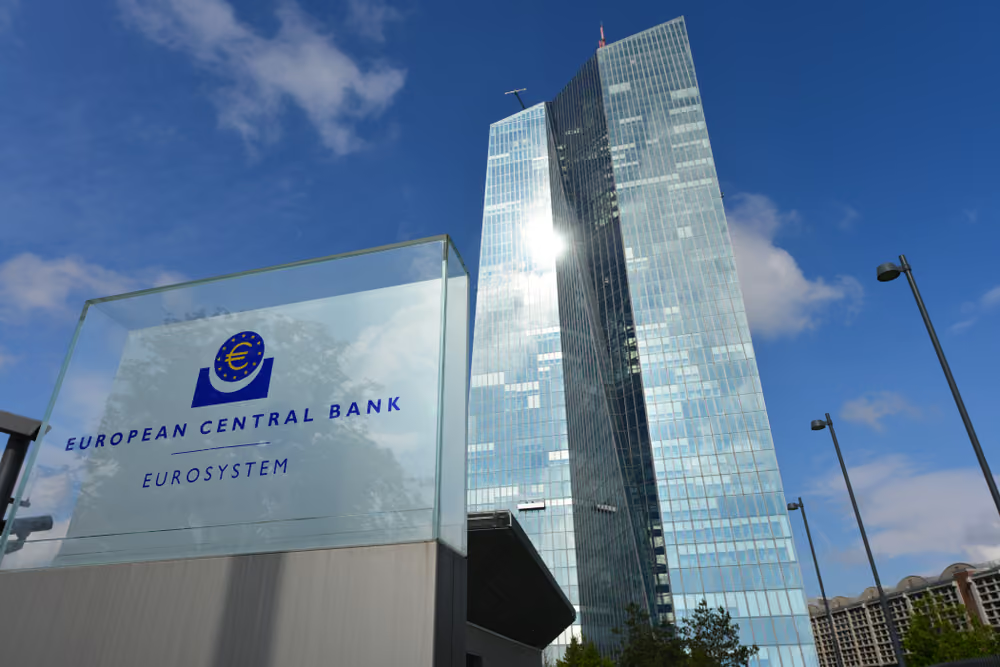
The European Central Bank (ECB) is considering altering the climate titling of its corporate and sovereign bond portfolios.
On 10 January, the ECB confirmed it is considering reshuffling the portfolio towards greener issuers due to rising interest rates.
High-interest rates have reduced the upfront costs of fossil fuel-based power plants, which has decreased the competitiveness of renewable energies.
The Central Bank is concerned this may decelerate the transition to a net-zero economy and discourage efforts to decarbonise economies.
Isabel Schnabel, member of the executive board of the ECB, said: “Failing to arrest high inflation in a timely manner would jeopardise the green transition more fundamentally.”
Corporate bond portfolios currently follow a flow-based tilting approach, which has been declared “insufficient to achieve our goal” by the ECB.
By using this approach, reinvestments of corporate bonds are readjusted based on a climate score that reflects issuers’ carbon intensity, decarbonisation plans, and climate-related disclosures.
The ECB is now considering moving to a stock-based tilting approach for its corporate bond portfolio, which will require actively reshuffling the portfolio towards greener issuers.
The stock-based approach will also apply to private asset classes, including covered bonds and asset-backed securities.
Following the change, the ECB will not divest from companies which play an important role in managing the green transition.
Instead, it will foster incentives for companies to companies to reduce emissions further.
Schnabel added: “A restrictive monetary policy stance today will benefit society over the medium to long run by restoring price stability.”
Over the past year, the ECB has already implemented changes to contain inflation and reduce rising interest rates.
The organisation stopped net asset purchases and announced plans to introduce a climate tilt to the €30bn annual reinvestment from its corporate sector purchase programme.
On 15 December, the three key ECB interest rates were also raised by 50 basis points.









Elizabeth Pfeuti